

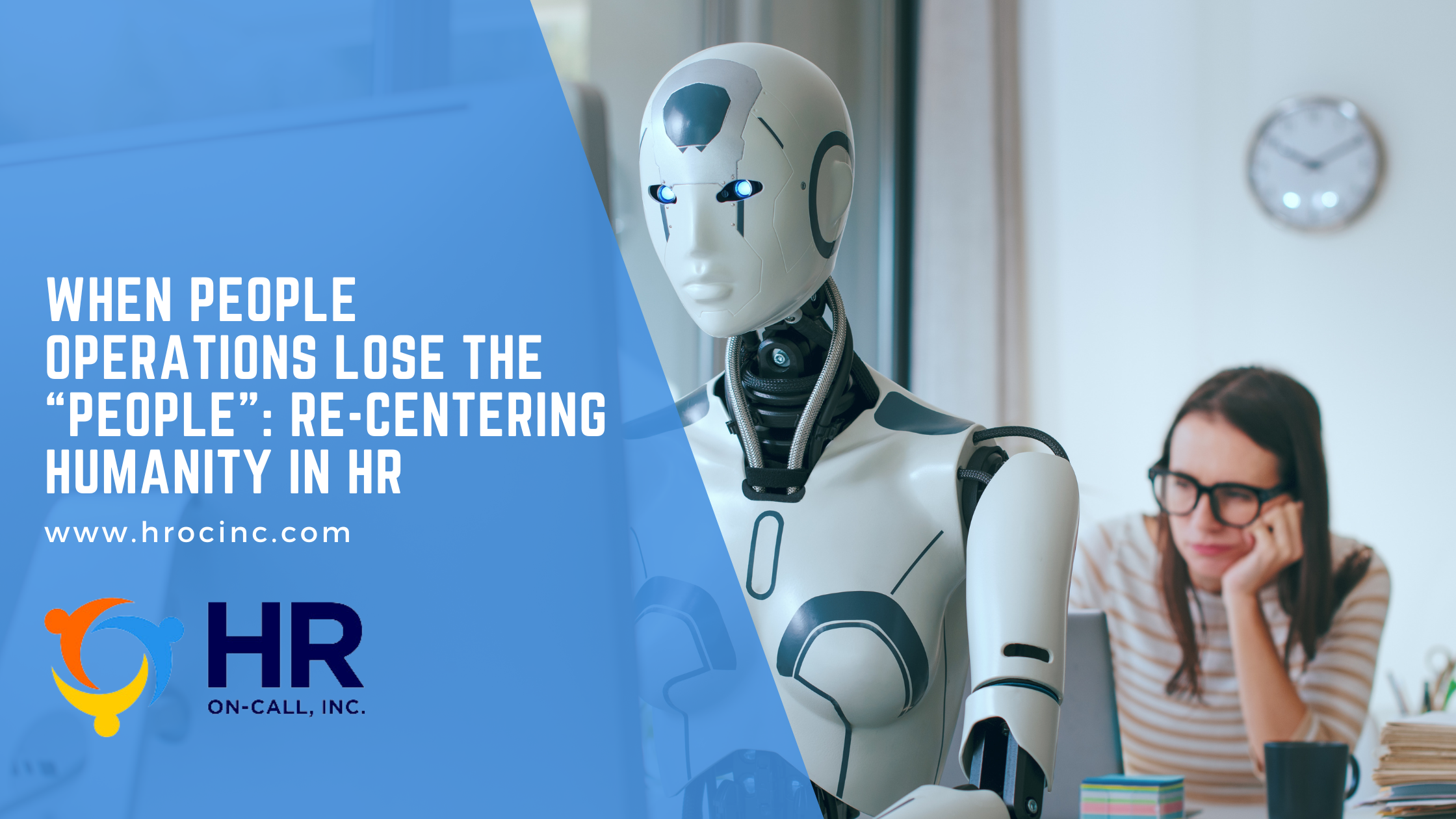
Human Resources has evolved significantly over the past decade. From administrative support to strategic business partner, HR now plays a central role in shaping organizational direction. But in that evolution, there’s a growing concern voiced by employees and leaders alike: what happens when HR becomes so process-driven that it starts to feel disconnected from the very people it’s meant to support?
This isn’t about intent. Most HR professionals enter the field to help people thrive at work. The challenge arises when competing pressures—compliance, scale, technology, and business demands—begin to outweigh the human element.
When Efficiency Starts to Override Empathy
Modern HR teams are often measured by efficiency: time-to-hire, cost-per-employee, case resolution speed. These metrics matter, but when overemphasized, they can unintentionally reduce employees to numbers or tickets in a system.
Employees notice when interactions feel transactional—when responses are templated, conversations are rushed, or policies are enforced without context. Over time, this can erode trust and discourage employees from raising concerns early.
The Hidden Cost of Over-Standardization
Consistency is essential in HR, especially for fairness and compliance. But strict adherence to standardized processes can leave little room for nuance.
Not every situation fits neatly into a policy framework. When HR teams default to rigid interpretations without considering individual circumstances, employees may feel unheard or undervalued. Balancing consistency with discretion is one of the most difficult—and most important—skills in modern HR.
Technology Without Connection
Digital tools have transformed HR operations: self-service portals, automated workflows, AI-driven recruiting. These innovations improve accessibility and scale, but they can also create distance.
When employees can’t easily reach a real person—or feel discouraged from doing so—it changes the relationship. Technology should enable human interaction, not replace it entirely. The most effective organizations use tools to remove friction, freeing HR teams to focus on meaningful conversations.
The Impact on Culture and Trust
When HR is perceived as impersonal or overly aligned with “the business” at the expense of employees, it can affect organizational culture. Employees may hesitate to speak up, disengage from feedback processes, or view HR as a compliance function rather than a support system.
Trust, once diminished, is difficult to rebuild. And without trust, even well-intentioned initiatives can fall flat.
Reintroducing the Human Element
Re-centering humanity in HR doesn’t mean abandoning structure or accountability. It means integrating empathy into every layer of the function.
- Train for emotional intelligence: Equip HR teams and managers to handle sensitive conversations with care, not just correctness.
- Encourage context-based decision-making: Allow room for judgment where appropriate, while maintaining fairness.
- Make space for real conversations: Ensure employees have access to human support when it matters most.
- Listen actively—and visibly: Close the loop on employee feedback so people know they’ve been heard.
A Function Worth Getting Right
HR sits at a unique intersection: advocating for employees while supporting business goals. That balance isn’t always easy, but it’s essential.
When HR maintains its human core—especially in moments of conflict, change, or uncertainty—it strengthens not just individual relationships, but the organization as a whole.
Because at its best, HR isn’t just about managing policies or processes. It’s about understanding people—and making sure they don’t get lost in the system.