

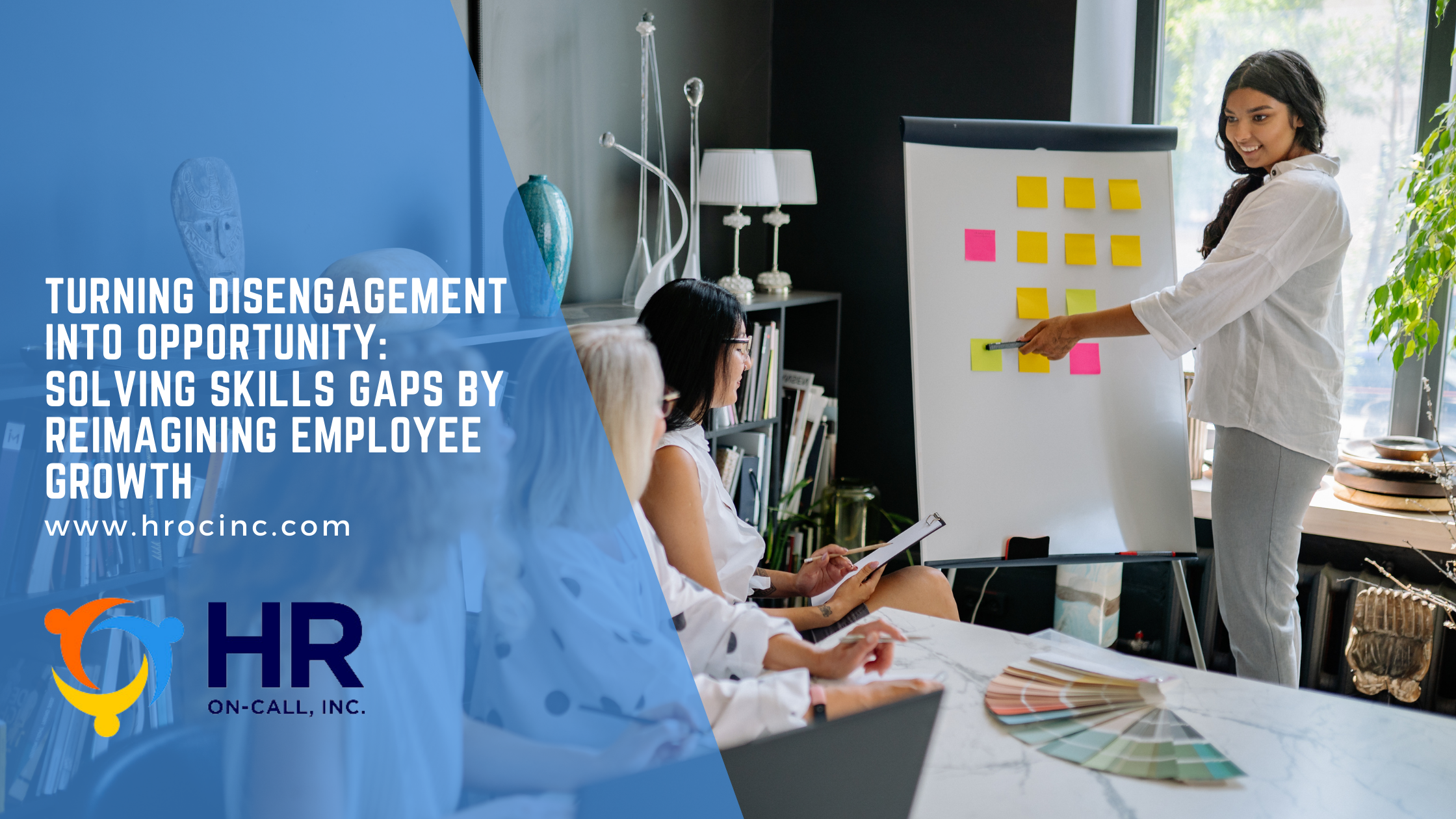
For many organizations, declining employee engagement and widening internal skills gaps appear to be two separate challenges. One feels cultural and human; the other operational and strategic. In reality, they are often symptoms of the same underlying issue: employees who are eager to grow but unsure how to do so within their current environment.
When organizations begin to view disengagement not simply as a morale problem, but as a signal that employees may feel stagnant or underutilized, a new opportunity emerges. Addressing growth and development in a more intentional way can simultaneously re-energize employees and build the capabilities the business needs most.
Engagement Often Declines When Growth Stalls
Employees rarely disengage overnight. More often, it happens gradually—when work becomes repetitive, when career pathways feel unclear, or when individuals cannot see how their skills can evolve within the organization.
At the same time, leadership teams frequently identify critical gaps in areas such as digital skills, leadership readiness, or cross-functional expertise. The instinctive response may be to hire externally, but this approach can overlook the untapped potential already within the organization.
Many employees are willing—and often eager—to learn new capabilities if they see a meaningful path forward. When companies create visible opportunities for development, engagement naturally begins to improve.
Shifting From Roles to Skills
One way organizations can bridge engagement and capability development is by focusing less on rigid job roles and more on skills.
Employees often possess talents that extend beyond the narrow scope of their current positions. By gaining better visibility into employee capabilities and aspirations, companies can uncover hidden strengths and connect people to opportunities where they can contribute in new ways.
This shift helps employees feel seen not just for what they do today, but for what they could grow into tomorrow.
Making Internal Mobility Real
Internal mobility is one of the most effective tools for both strengthening engagement and closing skills gaps, yet many organizations struggle to make it accessible.
When employees believe their only path to advancement is outside the company, motivation and retention suffer. But when internal movement—whether through projects, temporary assignments, or new roles—is encouraged and visible, it signals that growth is possible without leaving.
Even small opportunities to participate in cross-functional initiatives can expose employees to new challenges, build valuable capabilities, and renew their sense of purpose.
Embedding Learning Into Everyday Work
Development does not always need to come from formal training programs. In fact, some of the most meaningful skill-building happens through everyday work experiences.
Stretch assignments, collaborative projects, mentorship, and peer learning can help employees develop new competencies while contributing directly to business goals. This approach keeps learning practical, relevant, and immediately connected to real outcomes.
When employees see their skills expanding through the work they already do, development becomes energizing rather than burdensome.
A More Human-Centered Approach to Capability Building
Organizations often approach skills gaps with urgency—focusing on what the business lacks. But the more sustainable approach begins with people: understanding their motivations, recognizing their potential, and giving them room to grow.
When companies invest in employees’ development in a visible and authentic way, they do more than close capability gaps. They create an environment where people feel valued, challenged, and connected to the organization’s future.
In that sense, declining engagement may not simply be a problem to solve—it can be the catalyst that encourages organizations to rethink how they nurture talent and unlock the potential already within their workforce.